
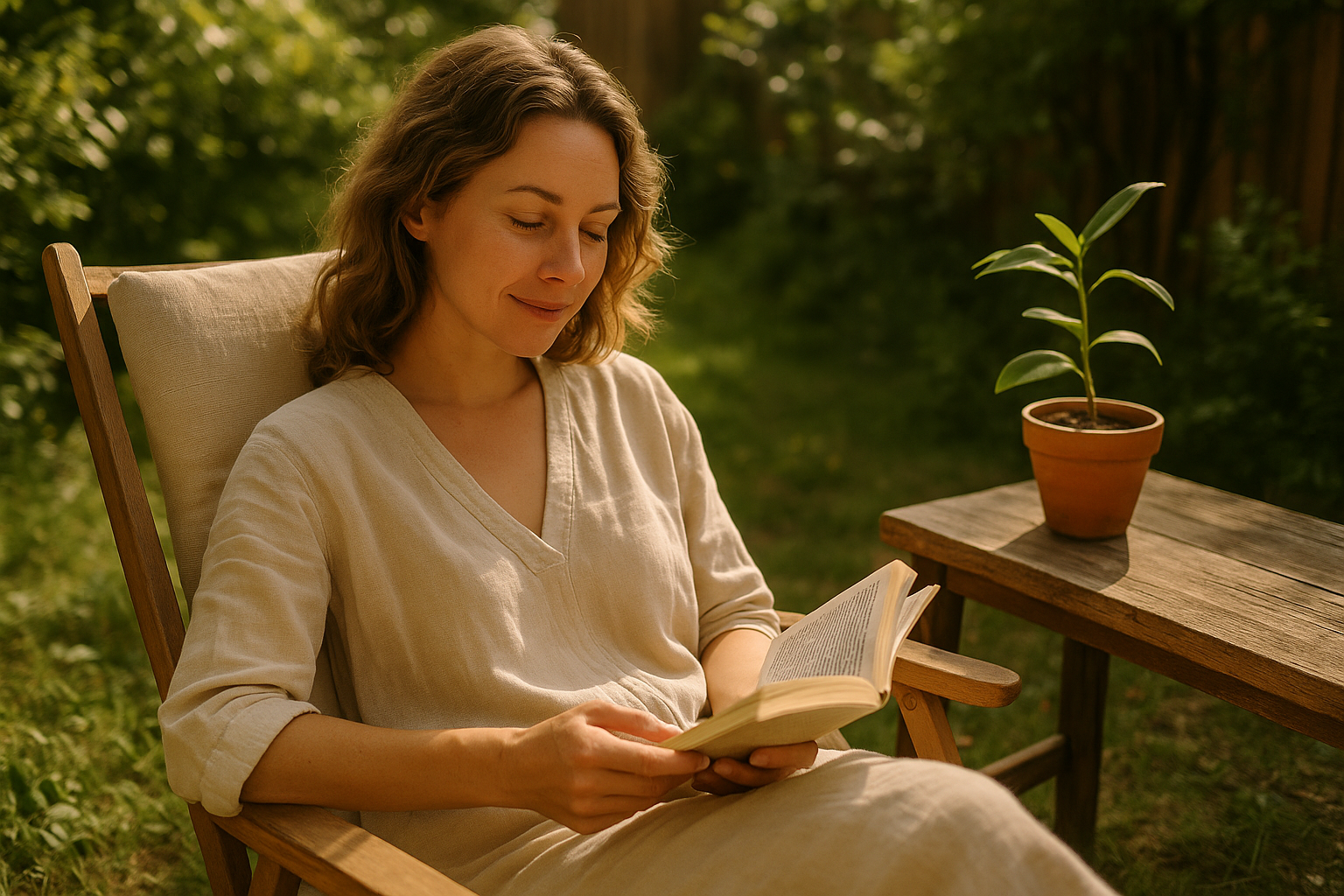
What If You Slowed Down?
Do you ever feel like life is moving too fast? Like you’re racing through your days, checking off tasks but missing the point? In a world that celebrates speed, slow living offers something radical: presence. It’s not about doing less for the sake of it — it’s about doing things with intention. And as it turns out, this gentle lifestyle shift not only improves your well-being, but also benefits the planet.
Slow living is the intersection of sustainability, simplicity, and self-awareness. It’s the antidote to consumerism and chaos. And it begins, not with a dramatic change, but with a decision to pause — to choose thoughtfully instead of habitually.
Redefining “More” in a World of Excess
We’ve been taught that more is better. More stuff, more speed, more productivity. But this “more” often leads to waste — in our time, energy, and resources. Slow living challenges that idea. It invites us to buy less, but better. To choose quality over quantity. To prioritize what lasts, what nourishes, and what truly adds value.
This mindset naturally leads to more sustainable choices:
- Eating locally and seasonally, rather than relying on imported, packaged food
- Choosing clothes you’ll wear for years, not just this season
- Fixing or repurposing items, rather than replacing them immediately
- Spending time in nature, instead of in shopping malls
- Valuing experiences over things
These aren’t restrictions — they’re liberations. When you shift your focus from accumulation to appreciation, your entire relationship with consumption changes.
Time as a Renewable Resource
Slow living isn’t only about what you consume — it’s also about how you use your time. The modern world often equates busyness with success. But is a full calendar the same as a full life?
When you slow down, you begin to notice things: the way sunlight moves through your kitchen in the morning, the taste of your coffee, the feeling of walking barefoot on grass. You also begin to reconnect with your own rhythms. You make room for creativity, rest, connection — things that don’t show up on productivity charts but define a rich life.
Living slowly doesn’t mean abandoning ambition. It means aligning your actions with your values. It means being fully present in what you do, instead of rushing to the next task. And that, paradoxically, can lead to deeper, more meaningful progress.
Living Well With Less Impact
One of the most beautiful aspects of slow living is its ecological harmony. The slower you live, the smaller your footprint tends to be. You cook more and waste less. You walk instead of drive. You choose thoughtful design over throwaway trends. Every small decision reflects care — for yourself, for others, and for the Earth.
In embracing this lifestyle, you’re not escaping the world — you’re engaging with it more deeply. You’re choosing depth over pace, intention over impulse. And in that stillness, you find space to grow.